
Introduction
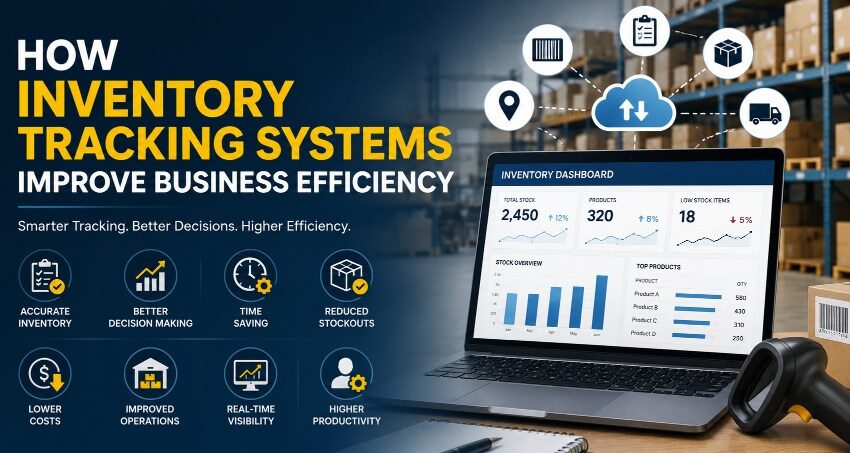
Efficient inventory management is essential for the success of any business that handles physical products. Whether operating a retail store, warehouse, manufacturing facility, or e-commerce business, organizations must maintain accurate control over their inventory to meet customer demands and achieve operational goals. Inventory tracking systems have become valuable tools for businesses seeking to improve accuracy, reduce costs, and streamline daily operations. By providing real-time visibility into stock levels and inventory movement, these systems help organizations make informed decisions and maintain greater control over their resources.
As businesses grow and supply chains become more complex, manual inventory management methods often become inefficient and prone to errors. Inventory tracking systems address these challenges by automating inventory processes and providing accurate data that supports better planning and decision-making. Understanding how these systems improve business efficiency can help organizations optimize operations, enhance customer satisfaction, and maintain a competitive advantage in today’s dynamic marketplace.
Understanding Inventory Tracking Systems
An inventory tracking system is a technology-based solution used to monitor, manage, and control inventory throughout the supply chain. These systems track products from procurement and storage to sales and distribution.
Modern inventory tracking systems typically include features such as:
- Real-time inventory monitoring
- Barcode scanning
- Product categorization
- Stock level alerts
- Order tracking
- Reporting and analytics
- Multi-location inventory management
- Automated stock updates
These capabilities provide businesses with greater visibility into inventory performance and support efficient resource management.
Improving Inventory Accuracy
One of the most significant benefits of inventory tracking systems is improved inventory accuracy. Manual inventory management often relies on spreadsheets or paper-based records, which are susceptible to human errors.
Common errors include:
- Incorrect stock counts
- Data entry mistakes
- Lost records
- Duplicate entries
- Misplaced inventory
Inventory tracking systems automatically record inventory movements and update stock levels in real time. This reduces the likelihood of errors and ensures that inventory records accurately reflect actual stock levels.
Accurate inventory data enables businesses to make informed purchasing decisions and avoid costly mistakes associated with inaccurate stock information.
Reducing Stockouts and Overstocking
Maintaining optimal inventory levels is a major challenge for many businesses. Having too little inventory can result in stockouts, while excessive inventory can increase storage costs and tie up valuable capital.
Inventory tracking systems help businesses balance inventory levels by providing accurate and up-to-date stock information.
Benefits include:
- Early identification of low-stock items
- Automated reorder alerts
- Improved demand forecasting
- Better purchasing decisions
By reducing stockouts and overstocking, businesses can improve cash flow, enhance customer satisfaction, and minimize waste.
Enhancing Operational Efficiency
Inventory tracking systems streamline various inventory-related processes that would otherwise require significant manual effort.
Examples include:
- Inventory counting
- Stock transfers
- Product receiving
- Order fulfillment
- Inventory audits
Automation reduces administrative workloads and allows employees to focus on higher-value tasks.
As a result, businesses can complete operations more quickly, reduce labor costs, and improve overall productivity.
Supporting Better Decision-Making
Data-driven decision-making is essential in modern business environments. Inventory tracking systems generate valuable insights that help managers evaluate performance and identify opportunities for improvement.
Key reports may include:
- Inventory turnover rates
- Product demand trends
- Sales performance
- Stock valuation
- Slow-moving inventory analysis
Access to accurate data enables businesses to make strategic decisions regarding purchasing, pricing, promotions, and inventory planning.
Better decisions contribute to improved operational efficiency and business growth.
Improving Customer Satisfaction
Customer satisfaction depends heavily on product availability and timely order fulfillment.
Inventory tracking systems help businesses:
- Maintain accurate stock information
- Prevent overselling
- Fulfill orders faster
- Reduce shipping delays
- Improve order accuracy
When customers receive the correct products on time, their confidence in the business increases.
Satisfied customers are more likely to become repeat buyers and recommend the business to others, contributing to long-term success.
Streamlining Order Fulfillment
Order fulfillment is a critical business process that directly affects customer experience.
Inventory tracking systems improve fulfillment efficiency by:
- Providing real-time stock visibility
- Identifying product locations quickly
- Automating inventory updates
- Reducing picking errors
Warehouse staff can process orders more efficiently because they know exactly where products are located.
Faster fulfillment reduces delivery times and improves operational performance.
Facilitating Real-Time Inventory Visibility
Real-time visibility is one of the most valuable features of modern inventory tracking systems.
Businesses can instantly access information about:
- Current stock levels
- Product locations
- Incoming shipments
- Outgoing orders
- Inventory movements
Real-time visibility allows managers to respond quickly to changing conditions and make proactive decisions.
This level of transparency improves operational control and reduces uncertainty throughout the supply chain.
Supporting Multi-Location Inventory Management
Many businesses operate multiple warehouses, retail stores, or distribution centers.
Managing inventory across multiple locations can be challenging without proper systems.
Inventory tracking systems provide centralized control over inventory across all locations.
Benefits include:
- Inventory transfers between facilities
- Centralized stock monitoring
- Improved resource allocation
- Reduced inventory duplication
Businesses can optimize inventory distribution and ensure products are available where they are needed most.
Reducing Inventory Carrying Costs
Inventory carrying costs include expenses associated with storing and maintaining inventory.
These costs may involve:
- Warehouse rent
- Insurance
- Utilities
- Security
- Product depreciation
Inventory tracking systems help businesses reduce carrying costs by improving inventory planning and minimizing excess stock.
Better inventory management leads to more efficient use of storage space and financial resources.
Improving Demand Forecasting
Accurate demand forecasting is essential for maintaining appropriate inventory levels.
Inventory tracking systems collect historical sales and inventory data that can be used to identify trends and predict future demand.
Improved forecasting helps businesses:
- Prepare for seasonal demand fluctuations
- Avoid stock shortages
- Reduce excess inventory
- Optimize purchasing schedules
Reliable forecasts support more efficient inventory management and improve overall business performance.
Enhancing Supply Chain Visibility
Inventory tracking systems contribute to greater supply chain transparency.
Businesses can monitor inventory movement from suppliers to customers, allowing them to identify bottlenecks and inefficiencies.
Improved supply chain visibility helps organizations:
- Track shipments
- Monitor supplier performance
- Reduce delays
- Improve coordination
Enhanced visibility strengthens supply chain operations and supports business continuity.
Minimizing Human Error
Human error is one of the most common causes of inventory discrepancies.
Manual inventory processes often result in:
- Incorrect counts
- Misplaced products
- Data entry errors
- Inaccurate reports
Inventory tracking systems automate many tasks, reducing reliance on manual processes.
Automation improves accuracy, consistency, and reliability across inventory operations.
Supporting Business Growth
As businesses expand, inventory management becomes increasingly complex.
Inventory tracking systems provide scalable solutions that support growth by managing larger inventories and increasing transaction volumes.
Benefits for growing businesses include:
- Improved inventory control
- Better operational efficiency
- Enhanced customer service
- Greater visibility into performance
Scalable inventory systems allow businesses to expand without sacrificing efficiency or accuracy.
Increasing Warehouse Productivity
Warehouse productivity plays a significant role in overall business performance.
Inventory tracking systems improve warehouse operations by:
- Optimizing storage locations
- Reducing search times
- Improving picking accuracy
- Streamlining workflows
Employees spend less time locating products and more time completing productive tasks.
Increased productivity contributes to faster order processing and reduced operational costs.
Enabling Better Financial Management
Inventory represents a significant financial asset for many businesses.
Inventory tracking systems provide accurate inventory valuation data that supports financial management and reporting.
Businesses can monitor:
- Inventory value
- Stock turnover
- Product profitability
- Purchasing costs
Accurate financial information helps organizations manage budgets, control expenses, and improve profitability.
Strengthening Inventory Security
Inventory theft and loss can negatively impact profitability.
Inventory tracking systems help improve security by maintaining detailed records of inventory movements and transactions.
Features such as user access controls and audit trails make it easier to identify discrepancies and investigate issues.
Enhanced security reduces losses and protects valuable business assets.
Supporting Regulatory Compliance
Many industries must comply with regulations related to inventory management and record keeping.
Inventory tracking systems help businesses maintain accurate records that support compliance requirements.
Benefits include:
- Detailed audit trails
- Accurate documentation
- Improved traceability
- Easier reporting
Compliance reduces legal risks and helps businesses maintain industry standards.
Encouraging Continuous Improvement
Inventory tracking systems generate performance data that businesses can use to identify inefficiencies and opportunities for improvement.
Managers can analyze metrics such as:
- Inventory turnover
- Order accuracy
- Fulfillment speed
- Stockout frequency
Continuous monitoring supports ongoing process optimization and operational excellence.
Businesses that regularly evaluate performance are better positioned to adapt to changing market conditions.
The Future of Inventory Tracking Systems
Technological advancements continue to improve inventory tracking capabilities.
Emerging technologies include:
- Artificial intelligence
- Machine learning
- Internet of Things (IoT)
- Predictive analytics
- Advanced automation
These innovations enable businesses to achieve even greater accuracy, efficiency, and visibility within their inventory operations.
As technology evolves, inventory tracking systems will play an increasingly important role in business success.
Conclusion
Inventory tracking systems have become essential tools for organizations seeking to improve efficiency, accuracy, and profitability. By providing real-time visibility, automating inventory processes, reducing errors, and supporting data-driven decision-making, these systems help businesses optimize operations and maintain greater control over their inventory.
From reducing stockouts and carrying costs to improving customer satisfaction and supporting business growth, inventory tracking systems deliver benefits across multiple areas of business performance. As supply chains become more complex and customer expectations continue to rise, organizations that invest in effective inventory tracking solutions will be better equipped to achieve operational excellence and long-term success.
