
Introduction
Choosing the right product supplier is a critical decision that can significantly impact a business’s success. A supplier affects product quality, pricing, inventory availability, delivery performance, and customer satisfaction. Selecting a reliable supplier helps businesses maintain smooth operations, meet customer expectations, and achieve long-term growth.
With numerous suppliers available in today’s competitive market, businesses must carefully evaluate their options before making a decision. Factors such as quality, reliability, communication, pricing, and scalability should all be considered to ensure a strong and productive supplier relationship. Understanding these factors can help organizations build an efficient supply chain and support sustainable business success.
These considerations are especially important for Shopify dropshippers who depend on reliable suppliers to maintain customer satisfaction and business growth.
Understanding the Importance of Supplier Selection
Many businesses focus heavily on marketing, branding, and sales while overlooking the significance of supplier relationships. However, even the best marketing strategy cannot compensate for poor product quality or unreliable deliveries.
A supplier influences several critical business functions, including:
- Product quality
- Inventory availability
- Customer satisfaction
- Business reputation
- Profit margins
- Operational efficiency
- Supply chain stability
Choosing a supplier should therefore be viewed as a strategic decision rather than a simple purchasing activity.
Product Quality
One of the most important factors to evaluate is product quality. The quality of the products you sell directly impacts customer satisfaction and brand reputation.
Customers expect products to perform as advertised. If they receive defective, damaged, or low-quality items, they may leave negative reviews, request refunds, or stop purchasing from your business altogether.
When assessing product quality, consider:
- Material standards
- Manufacturing processes
- Quality control procedures
- Product consistency
- Compliance with industry standards
Request product samples whenever possible. Testing products firsthand allows businesses to evaluate durability, functionality, appearance, and overall value.
Consistency is equally important. A supplier should be able to maintain the same quality standards across every order rather than providing excellent products initially and lower-quality products later.
Supplier Reliability
Reliability is a critical component of successful supplier relationships. A supplier may offer excellent prices and quality products, but if they consistently miss deadlines, business operations can suffer significantly.
Reliable suppliers:
- Deliver products on time
- Maintain inventory levels
- Communicate effectively
- Honor agreements
- Resolve issues promptly
Late deliveries can create inventory shortages, delay customer orders, and damage customer trust.
Businesses should investigate a supplier’s track record by reviewing testimonials, case studies, references, and customer feedback. Long-standing suppliers with a proven history of reliability are generally less risky than untested alternatives.
Pricing and Cost Structure
Price is often one of the first considerations when selecting a supplier, but it should never be the only factor.
The cheapest supplier may not necessarily provide the best value. Low prices can sometimes indicate lower quality standards, poor service, or hidden costs.
Businesses should evaluate:
- Product pricing
- Shipping costs
- Packaging fees
- Import duties
- Handling charges
- Payment processing fees
Instead of focusing solely on price, companies should consider total cost of ownership.
For example, a slightly more expensive supplier may provide better quality products, fewer defects, faster delivery, and stronger customer support, ultimately reducing operational costs.
Balancing affordability and quality is essential for long-term profitability.
Supplier Reputation
A supplier’s reputation can provide valuable insights into their reliability and professionalism.
Researching supplier reputation helps businesses avoid partnerships that may create future problems.
Methods for evaluating reputation include:
- Reading online reviews
- Checking industry forums
- Reviewing customer testimonials
- Examining case studies
- Requesting client references
A supplier with a strong reputation is more likely to maintain high standards because they have an established history of satisfying customers.
Industry recognition, certifications, and awards can also indicate credibility and expertise.
Production Capacity
As businesses grow, supplier capabilities become increasingly important.
A supplier must be able to meet current and future demand levels.
Questions to consider include:
- Can the supplier handle large orders?
- Can production be scaled quickly?
- What are their manufacturing limits?
- How do they manage peak demand periods?
Businesses that anticipate growth should select suppliers capable of supporting expansion.
A supplier that struggles to fulfill increasing order volumes can become a bottleneck that limits business growth.
Lead Time and Delivery Speed
Lead time refers to the period between placing an order and receiving the products.
Shorter lead times generally provide greater flexibility and improve inventory management.
Factors affecting lead times include:
- Manufacturing schedules
- Inventory availability
- Shipping methods
- Geographic location
- Customs procedures
Businesses should clearly understand expected lead times before entering into agreements.
Reliable delivery schedules help maintain stock levels, prevent shortages, and improve customer satisfaction.
Communication and Responsiveness
Effective communication is essential in supplier relationships.
Suppliers should be accessible, responsive, and transparent.
Poor communication can lead to:
- Order errors
- Delays
- Misunderstandings
- Inventory issues
- Customer complaints
A professional supplier should respond promptly to inquiries and provide accurate information regarding products, pricing, inventory, and shipping.
Strong communication becomes especially important when unexpected challenges arise.
Businesses should evaluate communication quality during initial interactions before committing to long-term partnerships.
Location and Logistics
Supplier location significantly affects shipping costs, delivery times, and supply chain efficiency.
Local suppliers may offer:
- Faster delivery
- Lower shipping costs
- Easier communication
- Better regulatory compliance
International suppliers may provide:
- Lower manufacturing costs
- Greater product variety
- Access to specialized products
However, global sourcing may involve challenges such as:
- Customs delays
- Currency fluctuations
- Language barriers
- International regulations
Businesses should carefully evaluate the trade-offs between local and international sourcing.
Quality Control Processes
Quality control systems help ensure product consistency and reliability.
Before selecting a supplier, businesses should understand:
- Inspection procedures
- Testing methods
- Defect management processes
- Certification standards
Suppliers with strong quality control systems are less likely to produce defective products.
Requesting information about manufacturing standards and inspection procedures can provide valuable insight into a supplier’s commitment to quality.
Financial Stability
Financially stable suppliers are generally more dependable business partners.
Financial instability can result in:
- Production interruptions
- Inventory shortages
- Operational disruptions
- Business closures
Signs of financial stability include:
- Years in operation
- Consistent growth
- Strong client base
- Positive industry reputation
Large orders and long-term contracts require confidence that a supplier can continue operating successfully in the future.
Compliance with Regulations
Businesses must ensure that suppliers comply with relevant laws and regulations.
Compliance areas may include:
- Product safety standards
- Environmental regulations
- Labor laws
- Industry certifications
- Import and export requirements
Non-compliant suppliers can expose businesses to legal risks, fines, and reputational damage.
Verification of certifications and regulatory compliance should be part of the supplier evaluation process.
Ethical Business Practices
Consumers increasingly value ethical sourcing and responsible business practices.
Businesses should assess supplier policies regarding:
- Worker treatment
- Fair wages
- Workplace safety
- Environmental responsibility
- Sustainable sourcing
Partnering with ethical suppliers supports corporate responsibility goals and strengthens brand reputation.
Transparency in business practices is becoming an important competitive advantage across many industries.
Inventory Management Capabilities
Inventory management plays a crucial role in supply chain performance.
Suppliers with effective inventory systems can:
- Prevent stock shortages
- Reduce fulfillment delays
- Improve order accuracy
- Support demand forecasting
Modern suppliers often utilize advanced inventory management technologies that provide real-time stock visibility.
Businesses should inquire about inventory monitoring and replenishment processes.
Technology Integration
Technology has transformed modern supply chain management.
Many suppliers now offer digital systems that integrate with business operations.
Examples include:
- Inventory synchronization
- Order tracking
- Automated invoicing
- Real-time reporting
- API integrations
Technology integration improves efficiency and reduces manual administrative work.
Businesses operating online stores often benefit from suppliers that support automated order processing and inventory updates.
Flexibility and Adaptability
Business environments constantly change due to market trends, seasonal demand, and economic conditions.
A flexible supplier can adapt to:
- Changing order volumes
- Product modifications
- Market fluctuations
- Emergency situations
Flexibility helps businesses respond quickly to customer needs and market opportunities.
Rigid suppliers may struggle to support changing business requirements.
Customer Service and Support
Strong customer service can make supplier relationships significantly more productive.
Excellent supplier support includes:
- Fast responses
- Problem resolution
- Technical assistance
- Order updates
- Professional communication
Suppliers should demonstrate a commitment to helping clients succeed rather than simply processing transactions.
Reliable support becomes especially important during supply chain disruptions or unexpected challenges.
Minimum Order Requirements
Many suppliers establish minimum order quantities (MOQs).
Businesses should evaluate whether these requirements align with their operational needs.
High MOQs may create challenges such as:
- Increased inventory costs
- Storage limitations
- Cash flow constraints
Smaller businesses may benefit from suppliers offering lower minimum order requirements.
Understanding order requirements in advance helps avoid financial strain and inventory issues.
Payment Terms and Conditions
Payment terms directly affect cash flow management.
Businesses should review:
- Payment schedules
- Credit terms
- Deposit requirements
- Financing options
- Currency requirements
Favorable payment terms can improve financial flexibility and support business growth.
Clear understanding of contractual obligations reduces misunderstandings and disputes.
Risk Management and Contingency Planning
Supply chains face various risks, including:
- Natural disasters
- Transportation disruptions
- Political instability
- Economic downturns
- Raw material shortages
Businesses should assess supplier preparedness for unexpected events.
Questions to ask include:
- Do they have backup facilities?
- What contingency plans exist?
- How do they manage disruptions?
Suppliers with strong risk management systems help ensure business continuity.
Scalability for Future Growth
Choosing a supplier is not only about current needs but also future growth.
A scalable supplier can support:
- Increased order volumes
- New product lines
- Geographic expansion
- Market growth
Switching suppliers during rapid business growth can be costly and disruptive.
Businesses should prioritize suppliers capable of supporting long-term expansion.
Transparency and Trust
Trust forms the foundation of successful supplier relationships.
Transparent suppliers openly share information regarding:
- Pricing
- Lead times
- Production schedules
- Product specifications
- Potential challenges
Lack of transparency can create uncertainty and increase business risk.
Open communication fosters stronger partnerships and better collaboration.
Long-Term Partnership Potential
The most successful supplier relationships often evolve into long-term strategic partnerships.
Long-term partnerships offer benefits such as:
- Better pricing
- Priority service
- Improved communication
- Collaborative planning
- Greater operational stability
Businesses should evaluate whether a supplier demonstrates commitment to mutual growth and long-term cooperation.
Strong supplier relationships can become a significant competitive advantage.
Conclusion
Choosing a product supplier is one of the most influential decisions a business can make. The right supplier contributes to product quality, operational efficiency, customer satisfaction, and long-term growth. The wrong supplier can create costly disruptions, damage reputation, and hinder business success.
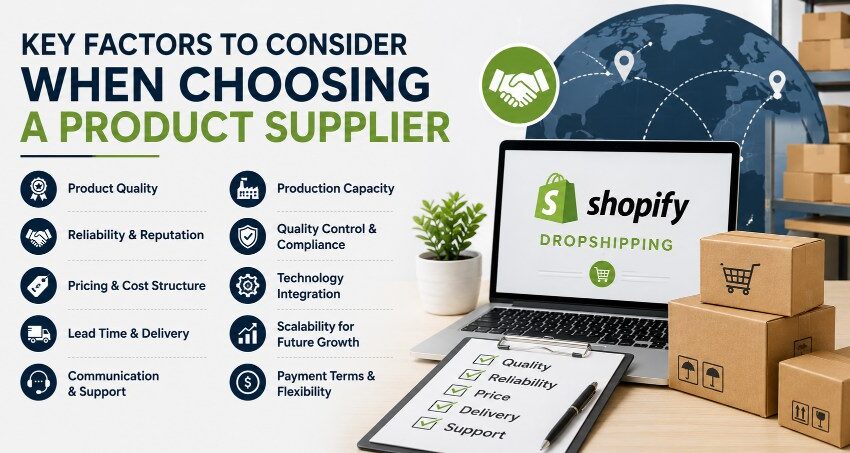
When evaluating potential suppliers, businesses should consider multiple factors, including product quality, reliability, pricing, reputation, production capacity, communication, compliance, technology integration, flexibility, customer service, and scalability.
Rather than focusing solely on cost, organizations should adopt a comprehensive evaluation process that considers both immediate needs and future growth objectives. Building strong relationships with trustworthy suppliers creates a stable foundation for sustainable business success.
By carefully assessing these key factors, businesses can make informed supplier selection decisions, strengthen their supply chains, improve customer experiences, and position themselves for long-term competitive advantage in an increasingly dynamic global marketplace.
