
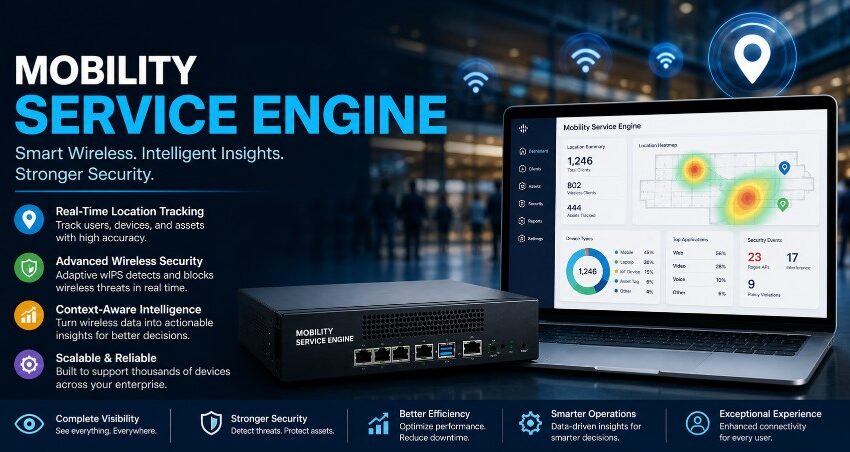
In modern enterprise networking, organizations rely on intelligent location and wireless management systems to improve connectivity, visibility, and performance. Cisco provides advanced infrastructure through its Cisco Mobility Services Engine, enabling real-time analytics, seamless wireless LAN integration, and scalable deployment across large networks. It helps enterprises optimize operations, enhance user experiences, and manage complex network environments efficiently. The system is widely used for enterprise Wi-Fi tracking, deployment flexibility, and operational intelligence in modern IT infrastructures. It supports scalable architectures, making it suitable for organizations seeking reliable connectivity, improved performance monitoring, and centralized network control across distributed environments while ensuring consistent service quality and real-time operational insights for enterprise networks at scale.
What Is Cisco Mobility Services Engine?
Modern wireless networks do much more than connect laptops and phones. Businesses now need systems that can monitor devices, track movement, and improve security in real time. This is where Mobility Services Engine becomes valuable. Developed by Cisco, this platform acts as a centralized appliance that adds intelligent services to wireless networks. Instead of treating Wi-Fi as only internet access, it turns the network into a source of location and security data.
Large organizations such as hospitals, airports, shopping malls, and universities often manage thousands of connected devices. Without visibility, those devices become difficult to track. Wireless infrastructure, network analytics, and device monitoring all become easier with Mobility Services Engine. The platform collects information from access points and controllers, then transforms raw data into useful insights for administrators.
Why Mobility Services Engine Matters
Think of a wireless network as a city full of moving objects. Phones, laptops, scanners, and tags constantly travel from one area to another. Mobility Services Engine works like a digital control tower. It watches movement patterns, identifies device locations, and supports security functions. As a result, businesses improve operational awareness while reducing blind spots inside complex wireless environments.
How Cisco Mobility Services Engine Works
At its core, Cisco Mobility Services Engine gathers data from wireless LAN controllers and access points installed across a building or campus. When a device connects to Wi-Fi, nearby access points detect signal strength and location data. The engine processes this information to estimate where that device is located. This process happens continuously, which allows near real-time visibility.
The platform then stores and analyzes collected information through integrated services. Administrators can view dashboards, monitor movement history, and generate alerts. For example, if an asset leaves a permitted zone, the system can flag unusual behavior instantly. Real-time tracking, signal analytics, and network visibility make the system practical for enterprises handling large operations.
Mobility Services Engine Architecture
The architecture usually includes wireless controllers, access points, and the Mobility Services Engine appliance itself. Controllers collect wireless data while the engine analyzes and enriches it. You can imagine it as a brain receiving signals from many sensors. This structure improves scalability because data stays organized even when thousands of devices connect simultaneously.
Key Features of Cisco Mobility Services Engine
One major reason organizations adopt Mobility Services Engine is its rich functionality. It supports location tracking, rogue device detection, asset visibility, and context-aware analytics. Rather than installing separate tools, businesses can manage several wireless services from one central platform. This saves time and reduces operational clutter.
Another important capability is adaptive security. The platform can detect suspicious wireless activity and trigger alerts before threats spread. For example, if an unauthorized access point appears inside a building, administrators can investigate quickly. Wireless security, rogue detection, and centralized management strengthen the entire network ecosystem.
Advanced Services in Mobility Services Engine
Beyond security and tracking, the platform also supports analytics for business decisions. Retail stores can study visitor movement. Hospitals can monitor equipment usage. Universities can analyze building occupancy. These insights turn ordinary Wi-Fi signals into operational intelligence, which gives businesses more value from existing infrastructure.
Cisco Mobility Services Engine for Location Tracking
Location intelligence is one of the strongest features inside Mobility Services Engine. Using Wi-Fi triangulation and signal analysis, the system estimates where devices are located inside a facility. This helps businesses locate equipment, users, and tagged assets with impressive accuracy. In busy environments, even small time savings matter.
Imagine hospital staff searching for a wheelchair or infusion pump. Instead of wasting valuable minutes, they can identify the last known location immediately. This improves workflow and reduces frustration. Indoor positioning, asset tracking, and location analytics create measurable operational benefits in large facilities.
How Mobility Services Engine Improves Tracking Accuracy
Accuracy depends on access point placement and signal quality. More access points generally improve precision. The system compares signal data from multiple sources, then calculates the likely device position. Like solving a puzzle with many clues, Mobility Services Engine combines small data points into a reliable location estimate.
Context-Aware Services in Mobility Services Engine
Context-aware services help networks understand more than simple connectivity. Instead of only knowing a device is online, Mobility Services Engine can identify where it is, when it moved, and how it behaves. This deeper awareness transforms a standard network into an intelligent environment.
Businesses can use contextual data to automate actions. For example, alerts may trigger when assets enter restricted zones. Retailers can study customer traffic patterns. Enterprises can monitor space utilization across buildings. Context-aware computing, behavior analytics, and location intelligence make network data far more meaningful.
Business Value of Mobility Services Engine Context Data
Raw data alone is like having puzzle pieces without the picture on the box. Context gives those pieces meaning. By understanding location and behavior together, businesses make faster decisions and improve efficiency. This practical intelligence explains why Mobility Services Engine remains important in enterprise wireless management.
Wireless Security with Cisco Mobility Services Engine
Wireless networks face constant threats because devices connect from many locations every day. A weak network is like leaving your house door open in a crowded market. Cisco Mobility Services Engine improves security by monitoring wireless activity and detecting suspicious behavior before it turns into a serious issue. This gives administrators stronger visibility across enterprise environments.
The platform works closely with wireless infrastructure to detect threats such as unauthorized access points, spoofing attempts, and unusual device patterns. Instead of reacting after damage happens, teams can respond faster. Network protection, threat detection, and wireless monitoring all become stronger through Mobility Services Engine security intelligence.
Why Security Matters in Mobility Services Engine
Security is not just about blocking hackers. It is also about protecting business operations. If a rogue device enters the network, sensitive information could leak quickly. Mobility Services Engine acts like a digital guard standing at every wireless entrance, helping organizations maintain safer and more controlled environments.
Adaptive wIPS in Cisco Mobility Services Engine
Adaptive wireless intrusion prevention, often called wIPS, is a major security layer in Cisco Mobility Services Engine. It continuously scans wireless traffic to identify harmful activity. Unlike traditional security tools that only monitor fixed points, adaptive wIPS adjusts to changing wireless conditions and emerging threats.
When suspicious behavior appears, the system alerts administrators immediately. For example, if someone creates a fake Wi-Fi hotspot that copies a company network, adaptive wIPS can detect it. Intrusion prevention, rogue access point detection, and wireless defense improve enterprise-level protection.
How Mobility Services Engine Uses Adaptive wIPS
Adaptive wIPS works by analyzing wireless packets, device identities, and traffic behavior patterns. It compares these against trusted baselines. Think of it like airport security checking travelers against watchlists. If unusual activity appears, administrators receive alerts before the issue spreads deeper into the network.
Benefits of Using Cisco Mobility Services Engine
Organizations adopt Mobility Services Engine because it combines visibility, security, and analytics in one system. Instead of using multiple disconnected tools, businesses centralize wireless intelligence under a single platform. This saves time and improves management efficiency across large environments.
Another strong advantage is operational insight. Administrators can track devices, monitor movement, and analyze location behavior. These insights support better decisions in healthcare, education, retail, and logistics. Operational efficiency, location analytics, and centralized management are major reasons companies continue investing in the platform.
| Benefit | Business Impact |
| Device Visibility | Easier monitoring of connected assets |
| Security Monitoring | Faster detection of wireless threats |
| Location Analytics | Better operational decisions |
| Centralized Platform | Simplified network management |
Business Advantages of Mobility Services Engine
The biggest advantage is clarity. Large wireless environments can feel chaotic without proper oversight. Mobility Services Engine reduces that confusion by converting wireless data into actionable intelligence. This helps organizations spend less time guessing and more time making informed decisions.
Device Tracking Through Mobility Services Engine
Tracking wireless devices is one of the most practical uses of Cisco Mobility Services Engine. The system collects signal information from access points to estimate where devices are located. This makes it easier to monitor laptops, scanners, smartphones, and tagged equipment.
In large campuses or hospitals, losing track of devices wastes both money and time. With Mobility Services Engine, administrators can quickly identify last known locations. Device visibility, real-time location, and wireless tracking improve efficiency across operations.
How Mobility Services Engine Tracks Devices
The tracking process depends on signal strength analysis from multiple access points. By comparing signals from different locations, the platform calculates approximate device positions. It works similarly to how maps estimate your phone location. This creates stronger oversight inside busy enterprise environments.
Asset Management Using Cisco Mobility Services Engine
Managing physical assets becomes easier when businesses know exactly where equipment is located. Cisco Mobility Services Engine helps organizations monitor tagged assets such as medical tools, warehouse scanners, or security devices. This reduces losses caused by misplacement or theft.
Instead of manually searching for assets, teams can check location data instantly. This saves labor hours and improves resource availability. Asset visibility, inventory control, and resource optimization become much more efficient with Mobility Services Engine.
Mobility Services Engine for Smart Asset Control
Imagine searching for a single device inside a giant warehouse without tracking support. It would feel like finding a needle in a haystack. Mobility Services Engine removes that problem by creating digital visibility. Organizations gain faster access to resources while reducing operational friction.
Mobility Services Engine for Wi-Fi Network Optimization
A strong wireless network needs more than signal coverage. It also needs intelligence that can identify issues before users notice them. Cisco Mobility Services Engine helps optimize Wi-Fi performance by collecting data from wireless controllers and access points. This information allows administrators to study traffic patterns and network behavior more clearly.
Poor Wi-Fi feels like driving on a highway full of traffic jams. Devices connect slowly, roam badly, and experience unstable performance. Mobility Services Engine reduces these issues through better monitoring and analysis. Wi-Fi optimization, network performance, and wireless efficiency improve across enterprise environments.
How Mobility Services Engine Supports Better Wi-Fi
The platform tracks device movement, signal quality, and access point interactions. By analyzing this data, administrators can identify overloaded zones or weak coverage areas. Instead of troubleshooting blindly, teams use real information to improve wireless design and maintain stronger connectivity.
How Mobility Services Engine Improves Network Visibility
Visibility is essential in modern wireless environments because hidden problems often create bigger failures later. Cisco Mobility Services Engine gives administrators a clearer picture of devices, movement, and wireless behavior. It turns network activity into understandable data rather than a messy stream of technical noise.
Without visibility, managing thousands of devices feels like walking through fog with a flashlight that barely works. Mobility Services Engine clears that fog by showing what devices are connected and where they are active. Network visibility, wireless analytics, and device awareness become far easier to manage.
Why Visibility Matters in Mobility Services Engine
When administrators can see the network clearly, they solve problems faster. Device issues, roaming failures, and unusual wireless activity become easier to detect. This reduces downtime and helps organizations maintain more stable operations across large wireless infrastructures.
Integration of Cisco Mobility Services Engine with Wireless LAN
Cisco Mobility Services Engine integrates directly with wireless LAN controllers and access points. This connection allows the platform to collect valuable wireless information without replacing the existing network structure. Businesses can strengthen intelligence while keeping their current wireless foundation in place.
The integration process creates a connected ecosystem where controllers feed data into the engine for deeper analysis. It is similar to adding a brain to an already functioning nervous system. Wireless LAN, network integration, and Cisco infrastructure work together to deliver smarter network management.
Mobility Services Engine and Wireless LAN Compatibility
Compatibility is one reason enterprises prefer Cisco solutions. Mobility Services Engine works alongside Cisco wireless architecture to create centralized visibility and security. This smooth connection reduces complexity and makes enterprise deployments easier to manage over time.
Scalability of Cisco Mobility Services Engine
As organizations grow, network demands increase quickly. More employees, devices, and access points create greater complexity. Cisco Mobility Services Engine is designed to scale with enterprise growth by supporting large numbers of wireless clients, assets, and tracked devices without losing performance quality.
A small office may manage dozens of devices while hospitals or universities manage thousands. The platform handles both environments efficiently. Scalable architecture, enterprise networking, and device expansion make Mobility Services Engine suitable for both growing and established organizations.
Why Scalability Matters in Mobility Services Engine
Technology should grow with the business rather than hold it back. If a network tool cannot scale, it eventually becomes a bottleneck. Mobility Services Engine supports expansion by maintaining centralized control even as wireless environments become larger and more demanding.
Real-Time Analytics in Mobility Services Engine
Real-time analytics is one of the most valuable capabilities in Cisco Mobility Services Engine. Instead of waiting for delayed reports, administrators receive immediate insights about wireless conditions, device movement, and security events. This enables faster reactions to operational changes.
Live analytics helps organizations make decisions based on current conditions rather than outdated assumptions. It is the difference between watching a live football match and reading yesterday’s score. Real-time analytics, live monitoring, and data intelligence improve operational awareness.
How Mobility Services Engine Delivers Real-Time Insights
The platform continuously processes data from wireless controllers and access points. As new activity occurs, dashboards update dynamically. This allows administrators to monitor trends, identify anomalies, and respond to issues without unnecessary delay, creating a more intelligent wireless management system.
Deployment Options for Cisco Mobility Services Engine
Choosing the right deployment model is important because network environments differ from one organization to another. Mobility Services Engine is usually deployed as an appliance-based platform connected with wireless LAN controllers and access points. This setup allows the engine to collect wireless data centrally while delivering advanced services such as tracking and security analysis.
Some organizations prefer a dedicated deployment inside data centers for stronger performance and easier management. Others integrate the platform into larger Cisco network ecosystems for centralized control. The choice depends on infrastructure size, security needs, and operational goals. Deployment architecture, wireless infrastructure, and network management all influence planning decisions.
Mobility Services Engine Deployment Considerations
Before deployment, organizations must evaluate access point density, controller compatibility, and expected device volume. A poor setup can reduce performance and limit analytics quality. Proper planning ensures the platform operates efficiently while supporting long-term growth and network intelligence objectives.
Common Use Cases of Cisco Mobility Services Engine
Cisco Mobility Services Engine is widely used across industries that depend on strong wireless visibility. Hospitals track medical equipment, airports monitor passenger movement, and retailers study visitor behavior inside stores. The platform transforms wireless infrastructure into an operational intelligence system.
Educational institutions also benefit by managing device connectivity and monitoring campus activity. Warehouses track scanners, inventory tags, and mobile devices to improve workflow. Location analytics, asset tracking, and wireless intelligence create measurable business improvements in these environments.
Real Business Applications of Mobility Services Engine
The strongest use cases involve environments where movement matters. If devices, staff, or assets constantly shift locations, Mobility Services Engine adds immediate value. It reduces wasted time, improves resource access, and strengthens overall operational awareness.
Cisco Mobility Services Engine in Enterprise Networks
Enterprise networks are often massive and difficult to manage without visibility tools. Thousands of users connect daily through laptops, mobile phones, scanners, and IoT devices. Cisco Mobility Services Engine provides centralized intelligence that helps administrators understand wireless activity more clearly.
Instead of managing disconnected network data, enterprises gain one platform for monitoring location, security, and device behavior. This creates stronger operational consistency. Enterprise networking, wireless management, and centralized visibility become easier to maintain.
Enterprise Value of Mobility Services Engine
Large businesses need more than internet connectivity. They need awareness, analytics, and security layered into the network itself. Mobility Services Engine supports these needs by turning wireless environments into data-driven ecosystems.

Challenges of Implementing Mobility Services Engine
Although Cisco Mobility Services Engine offers powerful benefits, implementation is not always simple. Organizations may face integration issues, infrastructure limitations, or compatibility concerns during deployment. Legacy wireless systems can slow adoption and increase setup complexity.
Another challenge involves access point placement. Location accuracy depends heavily on wireless design quality. Poor placement reduces tracking effectiveness. Implementation challenges, system integration, and wireless design should be reviewed carefully before deployment begins.
Common Mobility Services Engine Limitations
The platform performs best inside well-structured Cisco environments. Organizations with fragmented infrastructure may require upgrades or redesigns first. This can increase costs and extend project timelines before full deployment benefits appear.
Best Practices for Managing Mobility Services Engine
Strong management practices help organizations maximize platform performance. Administrators should monitor dashboards regularly, review alerts, and validate tracking accuracy across environments. Routine checks prevent unnoticed issues from becoming larger operational problems.
Software updates are equally important because they improve stability and security support. Teams should also review access point health and controller communication. System maintenance, network optimization, and performance monitoring keep Mobility Services Engine operating efficiently.
Management Tips for Mobility Services Engine
Good management is similar to maintaining a high-performance car. Even the best machine struggles without attention. Regular monitoring, updates, and infrastructure reviews help businesses maintain long-term wireless reliability.
Future of Cisco Mobility Services Engine Technology
Wireless technology continues evolving as organizations rely more on analytics, automation, and connected devices. Cisco Mobility Services Engine is positioned to support this shift through stronger data intelligence and improved location services.
Future development may include deeper AI integration, stronger analytics automation, and smarter behavior prediction. As networks become more dynamic, platforms like Mobility Services Engine will likely become even more valuable. Future networking, AI analytics, and smart infrastructure are shaping this direction.
Innovation Trends in Mobility Services Engine
The future is less about simple connectivity and more about network intelligence. Organizations increasingly want systems that understand patterns, predict issues, and support automation. Mobility Services Engine fits naturally into that technological evolution.
Why Businesses Choose Cisco Mobility Services Engine
Businesses choose Cisco Mobility Services Engine because it combines visibility, security, and analytics into one platform. Instead of relying on separate tools, organizations manage critical wireless services from a centralized environment.
This reduces operational complexity while improving efficiency. Device tracking, asset monitoring, and wireless security all become more manageable. Business efficiency, wireless intelligence, and centralized control are major reasons enterprises continue adopting the platform.
Business Value of Mobility Services Engine
At its core, the platform helps organizations make smarter decisions using wireless data. It transforms ordinary infrastructure into an intelligent business asset. For enterprises managing large wireless ecosystems, that shift provides long-term strategic value.
