
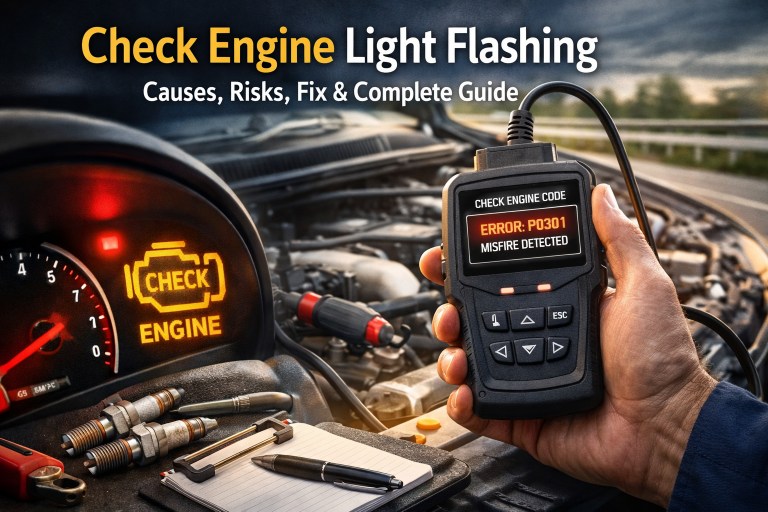
If your check engine light flashing suddenly appears, it’s a clear sign your car needs immediate attention before the problem gets worse. This guide focuses on real solutions, helping you quickly understand the most common and hidden check engine light flashing causes and what actions you should take right away. You’ll learn how to diagnose the issue step by step, apply practical fixes, and avoid costly engine damage. It also explains when a simple repair is enough and when professional help becomes necessary. Along with that, you’ll discover smart prevention tips and cost insights so you can handle a flashing check engine light confidently and keep your vehicle running smoothly without unnecessary stress.
Introduction to Check Engine Light Flashing
A check engine light flashing is one of the most serious warnings your car can show. It means the engine is not running normally and a critical fault is happening inside the combustion system. This usually points to engine misfires, where fuel is not burning correctly. If ignored, it can quickly damage important parts and increase repair costs. Many drivers mistake it for a minor issue, but it is actually an urgent signal that needs immediate attention.
Modern cars use sensors and an ECU (engine control unit) to monitor engine health continuously. When something goes wrong, the system alerts the driver. A flashing light means the problem is happening right now and is actively affecting performance. This is not a delayed warning; it is a live danger signal designed to protect your engine from severe damage and breakdown.
Why this warning should never be ignored
A check engine warning light system is built to prevent engine failure before it becomes permanent damage. When the light flashes, it often means unburned fuel is entering the exhaust system or ignition timing is failing. This can quickly destroy expensive parts like the catalytic converter or spark plugs. Continuing to drive can turn a small fault into a major engine repair.
Flashing vs Solid Check Engine Light
A check engine light flashing is very different from a solid light. A solid light usually means a minor or moderate issue such as a loose fuel cap, small sensor error, or slight emission imbalance. In this condition, the car may still run normally, but it still needs inspection soon to avoid future damage or performance loss.
A steady light is basically a stored warning. The car detects a problem but does not consider it immediately dangerous. Drivers often continue driving carefully for a short time. However, even a solid light should not be ignored because it can develop into a serious issue if left untreated for too long.
Why flashing is an emergency signal
When the light starts flashing, it usually means severe engine misfires or combustion failure. This causes unburned fuel to enter the exhaust system, leading to overheating and possible catalytic converter damage. Unlike a solid light, this is an active danger condition happening while you drive.
A flashing signal often comes with symptoms like shaking, poor acceleration, or engine vibration. These signs confirm that the engine is under stress and needs immediate attention. Ignoring it can quickly increase repair costs and risk complete engine damage.
Why Check Engine Light Starts Flashing
A check engine light flashing starts when the engine combustion process becomes unstable. The engine relies on a precise balance of air, fuel, and spark timing. When this balance is disturbed, the engine misfires. These misfires cause incomplete fuel burning, which triggers the warning system instantly.
Modern vehicles use advanced sensors to detect even small changes in engine behavior. If the ECU notices repeated misfires or irregular combustion, it activates the flashing light. This is a safety mechanism designed to prevent long-term engine damage and protect internal components from overheating or failure.
How engine imbalance triggers the warning
When air-fuel mixture becomes incorrect, the engine cannot function smoothly. Too much fuel or too little air creates combustion problems. This leads to unstable engine performance, vibrations, and loss of power. The system detects this imbalance and responds immediately.
In some cases, faulty sensors also send wrong signals to the ECU. This confuses the system and results in incorrect fuel adjustments. Over time, this can increase engine stress and cause the warning light to flash as a protective response.
Common Causes of Check Engine Light Flashing
A check engine light flashing is most commonly caused by ignition system failure. Spark plugs or ignition coils are responsible for creating the spark needed for combustion. When they fail, fuel does not burn properly, causing engine misfires, shaking, and poor acceleration. This is one of the most frequent issues drivers face.
Fuel system problems are another major cause. Dirty fuel injectors, clogged air filters, or low fuel pressure can disrupt the air-fuel mixture. When this balance breaks, the engine struggles to perform efficiently. This leads to unstable combustion and triggers the flashing warning light.
How fuel and ignition issues affect performance
When combustion is incomplete, the engine loses power and becomes inefficient. Drivers often notice rough idling, slow pickup, and increased fuel consumption. These are clear signs that the engine is not operating correctly and needs inspection.
If these problems are ignored, they can damage expensive components like the catalytic converter. This is why early diagnosis and repair are essential to prevent long-term engine failure and maintain smooth performance.
Also read BRAND NAME NORMALIZATION RULE GUIDE FOR ACCURATE DATA SYSTEMS
Hidden Causes Behind Check Engine Light Flashing
Sometimes a check engine light flashing is caused by hidden issues that are not immediately visible. Faulty oxygen sensors or mass airflow sensors can send incorrect readings to the engine control unit. This leads to improper fuel adjustments and unstable engine performance without obvious physical signs.
Electrical system problems can also be hidden but serious. Damaged wiring, loose connections, or ECU faults can interrupt communication between engine components. When signals are not transmitted correctly, the engine cannot maintain proper combustion, resulting in misfires and warning activation.
Why hidden faults are dangerous for the engine
Hidden issues are dangerous because the car may still run, but not efficiently. This means damage is slowly building inside the engine without immediate notice. Over time, this can lead to severe breakdowns and expensive repairs.
Professional diagnosis is often required to detect these hidden faults. Advanced scanning tools can identify sensor errors and communication failures, helping fix the issue before it becomes a major engine problem.
Why You Should Never Ignore a Flashing Light
A check engine light flashing is one of the most serious warnings a vehicle can show. It means the engine is experiencing strong misfires or unsafe combustion. This is not a normal alert; it is an emergency signal that the engine may be getting damaged while running. Many drivers ignore it, thinking it is minor, but this often leads to costly repairs.
When fuel does not burn properly, it creates extreme heat inside the engine and exhaust system. This heat slowly destroys important internal components. If the vehicle continues running in this condition, damage becomes worse within minutes.
| Risk Area | Possible Damage |
| Engine misfire | Severe vibration and power loss |
| Fuel system | Poor combustion and efficiency drop |
| Catalytic converter | Overheating and failure |
| Engine block | Permanent internal damage |
Serious Engine Warning
A check engine light flashing should always be treated as urgent. It means the ECU has detected dangerous misfires that can quickly destroy engine parts. Stopping early can prevent expensive engine repairs and long-term damage.
What to Do When Check Engine Light Is Flashing
When a check engine light flashing appears, the first step is to stay calm and immediately reduce speed. Avoid hard acceleration because the engine is already under stress. Continuing to drive aggressively can increase internal damage quickly.
Move your vehicle to a safe place as soon as possible. If the engine is shaking or losing power, avoid driving further. Turn off air conditioning and other electrical loads to reduce pressure on the engine.
Emergency Driving Response
A check engine light flashing requires fast action. Stop the vehicle safely and avoid long-distance driving. Call a mechanic or roadside assistance instead of trying to continue driving.
Step-by-Step Troubleshooting Guide
When you notice a check engine light flashing, first observe how the car behaves. Look for vibration, rough idle, or weak acceleration. These signs help identify whether the issue is related to ignition, fuel, or airflow problems.
Next, check simple things like the fuel cap and visible wires. Sometimes small issues can trigger warning lights, but flashing usually indicates a serious fault that needs proper inspection.
Systematic Problem Checking
A check engine light flashing should always be handled step by step. Start with symptoms, then check basic parts, and finally move to diagnostic scanning if needed. This helps avoid wrong assumptions and unnecessary repairs.
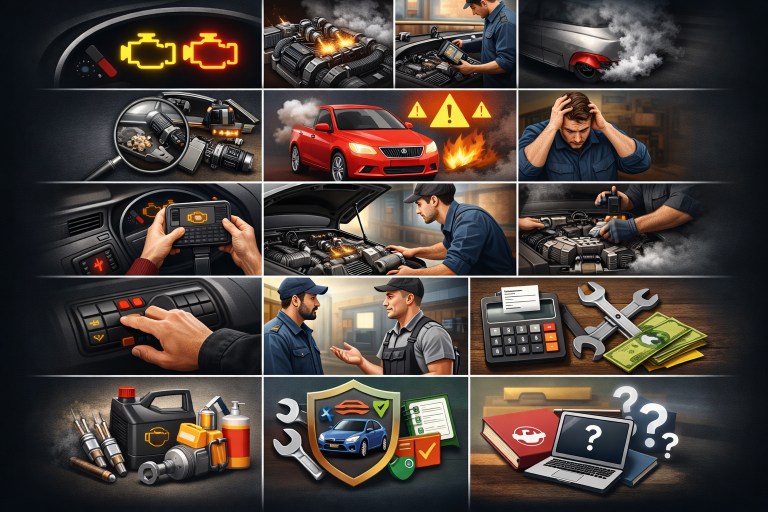
How to Diagnose Check Engine Light Flashing
A check engine light flashing is best diagnosed using an OBD-II scanner. This tool reads error codes stored in the car’s ECU and helps identify the exact issue. It is the most accurate way to understand engine problems.
These codes can point to ignition failure, fuel system issues, sensor errors, or airflow imbalance. Without this data, finding the real problem becomes difficult and time-consuming.
Advanced Engine Diagnosis
A check engine light flashing can also be analyzed using live engine data. Professional scanners show fuel pressure, misfire counts, and sensor readings. This helps mechanics detect hidden issues more accurately.
How to Fix Check Engine Light Flashing
Fixing a check engine light flashing depends on the exact cause of the problem. If spark plugs or ignition coils are faulty, replacing them usually solves the issue. These parts are essential for proper fuel burning.
Fuel system issues like clogged injectors can also trigger the warning. Cleaning or replacing them restores engine balance. Air filters and sensors may also need attention depending on the diagnosis.
Repair and Reset Process
After fixing the issue, a check engine light flashing must be reset using a scanner. This clears error codes and confirms repair success. If the light returns, further inspection is required.
Proper repair ensures smooth engine performance, better fuel efficiency, and long engine life.
Resetting Check Engine Light After Fix
After repairing the issue behind a check engine light flashing, the next important step is resetting the warning light. This ensures the car’s system recognizes that the problem has been fixed. In many modern vehicles, the light may not turn off automatically, even after the repair is complete, because the ECU stores error codes for safety verification.
Resetting can be done using an OBD-II scanner, which clears the stored fault codes from the system. Once cleared, the engine control unit rechecks all sensors during driving. If everything is normal, the warning light stays off. However, if the issue still exists, the light may appear again, showing that further inspection is needed.
System Recheck Process
A check engine light flashing reset is not just about turning off the light. It also involves confirming that the repair was successful. After resetting, the vehicle should be driven for a short period so the ECU can monitor engine performance in real conditions.
If no abnormal readings are detected, the system remains stable and the warning stays off. This final step ensures that the engine is fully safe and working properly after repair.
When to Seek Professional Help
A check engine light flashing is not something you should always try to handle alone. In many cases, the issue is too complex for basic inspection. If the car starts shaking heavily, losing power, or making unusual noises, it is a strong sign that professional help is needed immediately. Ignoring these symptoms can turn a repairable issue into serious engine failure.
Sometimes drivers try to continue driving or guess the problem without proper tools. This often makes the situation worse. Modern engines are controlled by advanced systems, and even small faults require proper diagnosis. A mechanic has the right equipment to find the exact issue quickly.
Signs You Need Expert Help
A check engine light flashing becomes critical when symptoms include engine vibration, sudden power loss, or strong fuel smell. These signs indicate severe misfires or fuel imbalance. At this stage, only a trained technician can safely inspect and repair the vehicle.
Delaying professional help can increase repair costs significantly and may damage expensive components like the catalytic converter or engine block.
Cost of Fixing Check Engine Light Flashing
The cost of fixing a check engine light flashing depends on the exact cause of the problem. Simple issues like replacing spark plugs or tightening a fuel cap are usually low-cost repairs. However, if ignition coils, injectors, or sensors are damaged, the cost can increase significantly.
In some cases, engine misfires may also damage the catalytic converter. This is one of the most expensive parts to replace in a vehicle. That is why early diagnosis is important to avoid high repair bills.
Repair Cost Breakdown
A check engine light flashing repair cost can vary widely. Minor fixes may be affordable, but major engine or emission system repairs can become expensive. Labor charges also depend on workshop location and vehicle type.
Early action always reduces cost because it prevents damage from spreading to multiple engine components.
Prevention Tips to Avoid Future Issues
Preventing a check engine light flashing situation is always better than repairing it. Regular maintenance is the key to keeping your engine healthy. Timely oil changes, air filter cleaning, and spark plug replacement help maintain smooth engine performance.
Good driving habits also play an important role. Avoid hard acceleration, overheating, and low-quality fuel. These habits reduce stress on the engine and improve its long-term reliability.
Simple Maintenance Habits
A check engine light flashing can often be avoided with regular vehicle checks. Inspecting sensors, fuel systems, and engine parts during routine service helps detect problems early.
Preventive care not only improves engine life but also saves money by avoiding major repairs in the future.
FAQs
1. Can I Drive My Car with the Check Engine Light Blinking?
A check engine light flashing means serious engine misfires are happening. Driving can quickly damage the engine and catalytic converter. Stop the car safely and get it checked immediately.
2. What Is the Most Common Cause of a Flashing Check Engine Light?
The most common cause is ignition failure like bad spark plugs or coils, leading to a check engine light flashing. Fuel imbalance can also trigger it. Both cause dangerous engine misfires.
3. How to Fix a Flashing Check Engine Light?
Fixing a check engine light flashing starts with OBD scan diagnosis. Replace faulty spark plugs, coils, or fuel parts as needed. Always reset the ECU after repair and recheck performance.
4. Which Is Worse: Flashing or Solid Check Engine Light?
A check engine light flashing is much worse than a solid one. Flashing means active engine damage, while solid is usually a minor issue. Flashing needs immediate action to prevent engine failure.
5. Check Engine Light Flashing Then Stops or Stays On?
A check engine light flashing that stops may still store serious error codes. If it stays on, the issue is still present. In both cases, professional diagnosis is strongly recommended.
6. Check Engine Light Flashing While Driving or When Accelerating?
A check engine light flashing during acceleration often indicates misfires under load. It usually points to ignition or fuel system failure. Reduce speed immediately and avoid heavy acceleration to prevent damage.
Also read Design and Engineering Practice – Master the Art of Modern Innovation

[…] Also Read: Check Engine Light Flashing: Causes, Risks & Fix Guide […]
[…] or harmful UV rays. Common types include dyed, metalized, carbon, and ceramic films. Among these, ceramic window tint is considered a premium option because it blocks heat efficiently without affecting mobile or GPS […]