
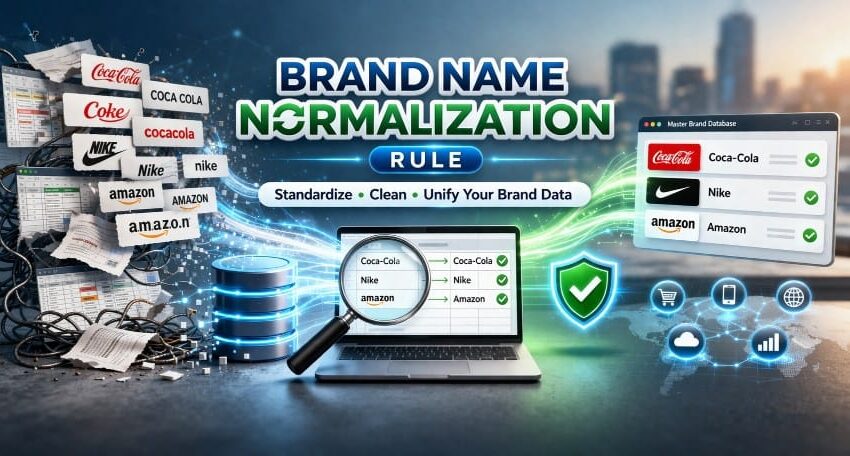
What Is Brand Name Normalization Rule in Technology
The brand name normalization rule is a structured method used in technology systems to standardize how brand names are stored and processed. It ensures that variations like “IBM Corp.” and “International Business Machines” are treated as one consistent entity. This improves data consistency and avoids confusion across platforms.
In modern databases, inconsistent brand names create duplication and errors that reduce system efficiency. The brand name normalization rule solves this by applying predefined logic such as formatting, spacing, and symbol cleaning. It strengthens data integrity and allows systems to deliver reliable results quickly.
How brand name normalization rule builds consistent data systems
When applied correctly, the brand name normalization rule connects scattered data into one unified structure. It removes unnecessary variations and aligns naming formats across systems. This creates a stable base for data management and enhances system performance. Over time, organizations see cleaner records, faster processing, and better decision-making powered by accurate and consistent brand data.
Why Brand Name Normalization Rule Is Important for Modern Data Systems
The brand name normalization rule plays a vital role in modern systems where data flows between multiple tools and platforms. Without standardization, systems struggle to match records correctly. This leads to broken insights and unreliable reports. A well-defined rule ensures smooth communication between tools and improves system integration.
Another key benefit is improved user experience. When data appears consistent, users trust the system more. The brand name normalization rule helps maintain uniform naming across dashboards, CRMs, and APIs. This builds confidence and supports better data governance in large organizations.
Why brand name normalization rule strengthens system reliability
A strong brand name normalization rule ensures that every dataset follows the same structure. This reduces mismatches and errors during processing. It also improves automation and allows systems to scale efficiently. Businesses can rely on their data systems for accurate insights, which directly supports growth and long-term stability in complex technology environments.
How Brand Name Normalization Rule Improves Data Accuracy
Data accuracy is one of the biggest challenges in technology systems. The brand name normalization rule directly improves this by eliminating duplicate entries and correcting inconsistent formats. It ensures that all brand names follow a unified structure, which enhances data quality across the entire system.
Accurate data leads to better analytics and reporting. When systems use normalized names, they can group and analyze information correctly. The brand name normalization rule supports reliable insights and helps organizations avoid costly mistakes caused by incorrect data.
How brand name normalization rule ensures precise analytics
The brand name normalization rule allows systems to match data points correctly without confusion. It aligns naming patterns and removes inconsistencies that affect analysis. This results in clear reports and better forecasting. Businesses gain deeper insights, improve performance tracking, and make smarter decisions based on clean and trustworthy data.
Role of Brand Name Normalization Rule in AI and Machine Learning
Artificial intelligence depends on clean and structured data to function effectively. The brand name normalization rule helps AI models understand and process brand-related data without confusion. It ensures that different variations of a brand are recognized as one entity, improving machine learning accuracy.
In machine learning, even small inconsistencies can affect predictions. The brand name normalization rule removes these inconsistencies and provides clean input data. This leads to better training results and more reliable AI outcomes in real-world applications.
How brand name normalization rule enhances AI performance
The brand name normalization rule improves how AI systems interpret brand data. It reduces noise and standardizes inputs, which strengthens model learning. As a result, AI systems deliver faster and more accurate predictions. This is essential for applications like recommendation engines, search systems, and automated decision-making tools.
Brand Name Normalization Rule in Big Data and Cloud Computing
In big data environments, massive datasets often contain inconsistent brand names. The brand name normalization rule ensures that all data follows a consistent format before processing. This improves data scalability and allows systems to handle large volumes efficiently.
Cloud computing platforms rely on standardized data to maintain performance across distributed systems. The brand name normalization rule supports this by ensuring uniform naming conventions. It enhances system reliability and enables smooth data exchange between cloud services.
How brand name normalization rule supports scalable cloud systems
The brand name normalization rule helps maintain consistency across multiple cloud environments. It ensures that data remains clean and structured, even at scale. This improves processing speed and reduces errors. Organizations benefit from better performance, reliable data pipelines, and efficient handling of large datasets in modern cloud-based systems.
Common Data Problems Solved by Brand Name Normalization Rule
The brand name normalization rule solves major issues in modern technology systems. Many times, the same brand is stored differently, like “Microsoft Corp”, “Microsoft Corporation”, or just “Microsoft”. These small differences create confusion and make systems treat them as separate entities. This breaks data consistency and affects reporting. Duplicate records appear, storage increases, and analytics become unreliable.
Human input errors make things worse. Employees or users may type extra spaces, add symbols, or use abbreviations differently. The brand name normalization rule fixes these problems by unifying all variations into a standard format. It also corrects capitalization and removes unnecessary punctuation. When applied correctly, systems can match records, produce accurate reports, and reduce wasted storage space. Clean data helps businesses make better decisions quickly and ensures that analytics are trustworthy.
How brand name normalization rule improves data systems
By applying the brand name normalization rule, every brand points to one clear identity. It removes duplicates and fixes messy entries. This improves system efficiency, speeds up processing, and ensures reports are accurate. Companies can rely on their data without errors or confusion, making operations smoother and faster across all platforms.
Core Principles of an Effective Brand Name Normalization Rule
A strong brand name normalization rule is based on clear principles. The first step is defining a canonical name, which becomes the official version of a brand. Every system then uses this single standard. This principle keeps data consistency across platforms and ensures reliable analytics.
Next is standard formatting. The brand name normalization rule removes extra words like “Ltd” or “Inc” and fixes capitalization and spacing. This creates clean and readable datasets. Flexibility is also key. The rule should handle abbreviations, regional variations, and user input errors without losing accuracy. These principles make the data manageable, easy to integrate, and reliable for reporting and decision-making.
How brand name normalization rule supports clean data
Following these principles ensures all systems have one uniform structure for brand names. The brand name normalization rule reduces errors, improves data quality, and makes workflows more efficient. Businesses benefit from faster data processing and more accurate insights, helping them grow without confusion.
Techniques Used in Brand Name Normalization Rule for Data Cleaning
The brand name normalization rule uses simple techniques to clean messy data. Text standardization converts all brand names to one format, improving data consistency. Removing symbols like periods, commas, and extra spaces ensures names are readable and uniform. Capitalization rules also help make the dataset clear.
Advanced techniques include lookup tables and pattern matching. These map variations to a single canonical name. Machine learning can even detect hidden inconsistencies and suggest corrections automatically. Using the brand name normalization rule, these techniques combine to produce clean, structured data. Clean data helps systems run faster and generate accurate results for analytics, reporting, and AI applications.
How brand name normalization rule improves efficiency
Automation reduces manual cleaning. The brand name normalization rule ensures every record follows the same structure. This improves data processing speed, reduces errors, and helps companies get reliable insights quickly. Clean, structured data makes systems smarter and easier to manage.
Building a Canonical Model Using Brand Name Normalization Rule
A canonical model gives each brand one official name. The brand name normalization rule maps all variations to this single version. This removes confusion, improves data alignment, and ensures every system uses the same brand format.
Creating this model involves collecting all variations, defining the canonical name, and linking them. Once implemented, the brand name normalization rule ensures data is uniform across platforms. This helps in integration between systems, improves analytics, and supports decision-making based on accurate information.
How brand name normalization rule creates consistent models
The brand name normalization rule connects all brand variations into a single system. It removes inconsistencies, strengthens data integrity, and simplifies reporting. Businesses gain a clear view of their data and can trust the information they use.
Automating Brand Name Normalization Rule with AI Tools
The brand name normalization rule becomes more powerful with AI. AI tools can process huge datasets quickly and correct name variations automatically. This reduces manual work and ensures data consistency in real-time. Automation makes normalization faster and more accurate.
Machine learning models can also learn patterns of variations and apply rules intelligently. The brand name normalization rule improves over time as AI detects more inconsistencies and fixes them before they create problems. This ensures systems always use clean, structured data.
| AI Tool Type | Function | Benefit |
| Machine Learning Models | Detect patterns in brand names | High accuracy |
| Automation Software | Apply normalization rules automatically | Fast processing |
| Cloud Platforms | Handle large datasets | Scalable and reliable |
| Data Matching Systems | Link variations to canonical names | Consistency |
How brand name normalization rule boosts AI automation
Using AI, the brand name normalization rule ensures clean input data. This improves model accuracy, reduces errors, and allows systems to scale efficiently. Businesses benefit from fast insights, reliable analytics, and seamless automated data processing across all platforms.
Integrating Brand Name Normalization Rule in APIs and Databases
The brand name normalization rule is not just for cleaning old data; it is essential when new data enters a system. When data moves between applications, APIs, or databases, different systems may store brand names in different ways. Without normalization, “Netflix Inc” and “Netflix” could be treated as separate entities, causing errors in records, analytics, or automated workflows. Integrating a brand name normalization rule ensures that all systems interpret brand names the same way, no matter where the data comes from.
APIs can apply normalization in real time, transforming brand names as data is sent or received. Databases can enforce rules to standardize entries at the moment they are saved. This reduces manual work and prevents mistakes that could accumulate over time. The brand name normalization rule also supports indexing, search, and linking across systems, making integration smooth and reliable. When systems share clean and consistent data, businesses save time and resources, improve reporting accuracy, and reduce the chance of conflicts between tools.
How brand name normalization rule improves system integration
Integrating the brand name normalization rule creates a unified structure across all APIs and databases. It removes duplicates and mismatched records, helping applications work together. Organizations get accurate data everywhere, and developers can rely on consistency without constantly checking for errors.
Impact of Brand Name Normalization Rule on Analytics and Reporting
Analytics depend on accurate and clean data. The brand name normalization rule directly affects how reports and dashboards are generated. If brand names are inconsistent, metrics may be undercounted or misrepresented. For example, if a system tracks sales for “Coca-Cola” but some entries are “Coca Cola” or “Coke”, reports will show incomplete results. Normalization aligns all variations, ensuring analytics reflect the true numbers and trends.
The brand name normalization rule also improves predictive modeling. Systems can analyze historical data without worrying about mismatched brand names. Insights become more reliable, trends are easier to detect, and strategic decisions are stronger. Dashboards, KPIs, and BI tools benefit from consistent naming, reducing confusion for stakeholders. Organizations that apply the brand name normalization rule see fewer errors, faster analysis, and clearer reporting.
How brand name normalization rule strengthens analytics
By standardizing brand names, the brand name normalization rule guarantees accuracy across reports and insights. Analysts and decision-makers can trust the data, improve forecasts, and make better business strategies with confidence.
Scaling Systems with Brand Name Normalization Rule
As companies grow, their systems handle more data from more sources. Without consistent brand names, scaling becomes chaotic. The brand name normalization rule ensures that new data is immediately aligned with existing records. This prevents duplicates, reduces errors, and makes systems easier to maintain as they expand.
Scaling also means adding new tools, cloud services, and third-party integrations. The brand name normalization rule provides a consistent framework that these tools can rely on. It helps businesses maintain clean data while handling millions of records. With normalization, companies can scale quickly without worrying that messy data will slow down systems or break processes.
How brand name normalization rule supports growth
The brand name normalization rule gives systems a solid foundation for expansion. It ensures that databases, APIs, and analytics tools continue to work smoothly even as data volume increases. Businesses save time, reduce errors, and maintain consistency while growing.
Security and Governance in Brand Name Normalization Rule
Data security and governance are critical when normalizing brand names. The brand name normalization rule must follow policies to protect sensitive information while cleaning and standardizing datasets. Systems must restrict access and log changes to ensure data integrity. Poor governance can lead to errors, duplicated entries, or security risks.
The brand name normalization rule also supports compliance. By standardizing data, organizations can generate accurate audit trails, track usage, and enforce rules consistently. It ensures that only authorized systems and personnel can alter brand data. Strong governance combined with the brand name normalization rule creates trustworthy datasets, protects information, and builds confidence across teams and stakeholders.
How brand name normalization rule enhances security
Implementing the brand name normalization rule with proper governance ensures clean, safe, and auditable data. Organizations maintain control while improving data quality, reducing risks, and supporting secure decision-making.
Challenges in Implementing Brand Name Normalization Rule
Implementing the brand name normalization rule is not always easy. One challenge is dealing with legacy systems. Older databases may have inconsistent or messy data that requires extensive cleaning. Another challenge is handling regional variations, abbreviations, or special characters. Without careful planning, these differences can create mismatches.
Automation helps, but AI models or rules must be trained and maintained. The brand name normalization rule also needs monitoring to ensure new data follows the same standards. Human oversight is sometimes required to handle exceptions. Despite these challenges, organizations that apply the brand name normalization rule consistently see fewer duplicates, better analytics, and smoother system performance.

How brand name normalization rule overcomes implementation hurdles
A structured approach with rules, AI tools, and monitoring ensures the brand name normalization rule works effectively. Challenges can be managed with clear processes, training, and continuous updates, creating reliable and consistent data across all systems.
Best Practices for Brand Name Normalization Rule in Technology
The brand name normalization rule works best when clear practices are followed. First, define a canonical name for each brand. This name becomes the standard across all systems. Any variation, whether it comes from an API, CRM, or manual entry, should point to this standard. This approach keeps data consistent and avoids confusion in reports or analytics.
Automation is another key best practice. Systems should apply the brand name normalization rule automatically as new data is entered. Manual fixes should only be needed for rare exceptions. Monitoring is also important. Regular audits check for misspellings, unexpected variations, and errors. Documenting your rules helps teams follow the standard and maintain high data quality over time.
Why following best practices improves data reliability
Following these best practices makes the brand name normalization rule effective, scalable, and reliable. Systems process data faster, errors decrease, and insights become more accurate. Businesses can trust their technology and make smarter decisions based on clean and unified data.
Future of Brand Name Normalization Rule in AI Systems
The brand name normalization rule is evolving with AI and machine learning. AI can detect subtle differences in brand names automatically, learning patterns from previous entries. This reduces human work and ensures consistent results across systems. AI can even predict new variations, helping the brand name normalization rule stay accurate as brands expand or change.
Real-time normalization is now possible with AI. Incoming data from APIs, user input, and cloud platforms can be standardized instantly. Predictive analytics, search engines, and recommendation systems all benefit because they rely on accurate, unified brand data. Continuous learning allows the brand name normalization rule to improve over time, handling abbreviations, symbols, and regional differences more efficiently.
How AI integration enhances normalization
The combination of AI and the brand name normalization rule provides faster, more accurate processing. Organizations get reliable insights and stronger analytics. Businesses that adopt AI-driven normalization gain a competitive edge by maintaining clean data while scaling operations.
Understanding Data Standardization in Technology
Data standardization ensures that all information in a system is consistent and uniform. The brand name normalization rule plays a crucial role by standardizing brand names across all platforms. This improves data quality, reduces duplicates, and makes analytics, reporting, and system integration much easier.
Without standardization, systems may treat variations like “IBM”, “I.B.M.”, or “Intl Business Machines” as different entities. This can lead to errors in dashboards, reports, and predictive models. The brand name normalization rule enforces rules for capitalization, spacing, symbols, and abbreviations, ensuring that each brand has a single, canonical version across all systems. Standardized data also improves automation. AI tools and analytics platforms work faster and produce more accurate results when brand names are consistent.
How standardization supports clean data
Applying the brand name normalization rule improves reliability, reduces errors, and ensures smooth operation. Clean and structured data allows organizations to scale their systems, maintain high-quality analytics, and trust the insights they receive.
Managing Brand Variations and Aliases in Databases
Many brands have multiple names, nicknames, or aliases. The brand name normalization rule solves this problem by mapping all variations to a single canonical name. For example, “Coca-Cola”, “Coke”, and “Coca Cola” would all point to the same standard brand. This ensures data consistency and prevents duplicate records from appearing in databases.
In large systems, data comes from different sources like CRM tools, sales platforms, and online forms. Without normalization, each system might store brands differently. The brand name normalization rule unifies historical and new data, making it easier to search, analyze, and report. It also helps AI and analytics models interpret data correctly, producing better insights and predictions. Consistent handling of brand variations ensures that companies make informed decisions based on accurate datasets.
How normalization manages aliases effectively
By applying the brand name normalization rule, organizations can confidently manage all brand variations. Data becomes unified, reporting is more reliable, and business intelligence is improved. Clean data across aliases supports scalability, accurate analytics, and smooth system operations.
Handling Abbreviations and Symbols in Data Systems
Abbreviations, symbols, and punctuation often cause inconsistencies in brand data. The brand name normalization rule standardizes these elements to ensure uniformity. Without clear rules, variations like “AT&T”, “AT and T”, or “ATT” can appear as separate brands, leading to duplicates and inaccurate analytics. A structured approach with automation or AI tools can solve this problem.
Here’s a simple table showing common abbreviations and symbols and how the brand name normalization rule standardizes them:
| Original Name | Standardized Form | Notes |
| AT&T | AT&T | Use ampersand consistently |
| AT and T | AT&T | Map to canonical form |
| ATT | AT&T | Short form handled by normalization |
| IBM | IBM | Maintain capitalization standards |
| I.B.M. | IBM | Remove extra punctuation |
| Intl Business Machines | IBM | Map full name to canonical form |
The brand name normalization rule ensures all variations point to a single standard version. This reduces errors, improves analytics, and keeps databases clean. Organizations can trust data, simplify searches, and maintain consistency across platforms.
Automating Brand Name Normalization Rule with AI Tools
The brand name normalization rule is highly effective when combined with AI. Modern systems process millions of brand records from APIs, CRMs, and cloud databases. Manual cleaning cannot keep up with this volume. AI tools detect variations, standardize names, and apply the brand name normalization rule automatically, saving time and ensuring consistent data.
Machine learning models identify patterns in brand names, detect abbreviations, alternate spellings, and symbols. Automation software applies rules instantly, while cloud platforms allow scaling across large datasets. AI-driven normalization ensures clean, accurate data for analytics, reporting, and decision-making in real time.
How AI tools enhance automation
Using AI with the brand name normalization rule reduces errors, supports scaling, and improves data reliability. Businesses gain accurate insights and trustworthy analytics while maintaining consistent brand data across all systems.
Designing Efficient Data Cleaning Pipelines
Creating efficient data cleaning pipelines is crucial for any business handling large datasets. The brand name normalization rule helps ensure that product names, customer entries, and transaction records are consistent, eliminating duplicates and format mismatches. Automated scripts with Python Pandas or SQL can validate, clean, and transform data quickly.
A modular approach makes pipelines flexible, while logging and error tracking allows teams to identify and correct issues fast. Combining batch processing with real-time validation provides a hybrid solution that guarantees accurate, clean, and standardized datasets for analytics, reporting, and AI applications.
Tools and Methods for Effective Data Cleaning
Using the right tools ensures that the data is processed efficiently. Libraries like Pandas, Dask, and SQL scripts handle large datasets and allow transformations based on the brand name normalization rule. Normalization ensures all formats, units, and naming conventions are uniform. Error detection and automated reporting enhance data reliability for AI, business intelligence, and customer management.
| Tool | Purpose | Key Benefit |
| Pandas | Cleaning & transformation | Flexible & fast |
| Dask | Large dataset processing | Scalable performance |
| SQL Scripts | Automate data tasks | Standardized workflow |
Ensuring Consistency Across Multi-Platform Systems
Maintaining consistency across platforms is vital for multi-system operations. The brand name normalization rule ensures that data from cloud services, APIs, and legacy software remains consistent. Real-time updates, scheduled batch syncs, and standardized schemas reduce integration errors and improve data reliability.
Monitoring dashboards, access control, and metadata management help detect discrepancies instantly. Studies show that companies enforcing multi-platform consistency see significant improvements in operational efficiency and a reduction in costly errors.
Best Practices for Cross-Platform Data Synchronization
Event-driven updates, scheduled batch processing, and automated validation rules ensure uniformity across systems. Version-controlled datasets prevent conflicts, and consistent naming conventions allow easy merging of information from different sources. Combining monitoring, governance, and error logging guarantees high-quality, reliable data at all times.
Real-World Applications of the Brand Name Normalization Rule in SaaS and CRM Platforms
SaaS and CRM platforms rely heavily on clean, standardized data. Using the brand name normalization rule, businesses ensure product and customer entries are consistent, enabling precise marketing, reporting, and analytics. AI recommendations, churn prediction, and customer segmentation all require reliable, normalized data.
Real-time synchronization ensures teams access the most current information, improving workflow efficiency and customer experience. Case studies show companies that implemented normalization saw a 30% increase in retention and more accurate analytics, directly boosting ROI and operational performance.
How Normalized Data Improves SaaS Efficiency
By applying the brand name normalization rule, SaaS platforms can integrate multiple services seamlessly. Standardized data supports predictive analytics, reporting, and automated workflows. Clean, normalized datasets also reduce errors in customer communication, marketing campaigns, and sales tracking, making systems more reliable and user-friendly.

Common Mistakes Developers Should Avoid When Implementing the Brand Name Normalization Rule
Ignoring validation, inconsistent naming, or failing to log errors can compromise data quality. Many developers rely on manual entry, outdated scripts, or single tools, causing corrupted or inconsistent datasets.
Proper implementation of the brand name normalization rule requires modular pipelines, error logging, and scalable tools. Documenting workflows, using validation checks, and maintaining consistent conventions ensures reliable, accurate, and efficient data management, which supports long-term business success and operational efficiency.
FAQs
1. What are the brand name normalization rules?
They ensure consistent naming of products and customers.
Duplicates are removed, and formats are standardized.
This improves data accuracy across all systems.
2. What is the 3 7 27 rule of branding?
It means 3% verbal, 7% tone, 27% body language.
Shows that perception and consistency matter most in branding.
3. What are the rules of 1NF, 2NF, and 3NF?
1NF: atomic values, 2NF: no partial dependencies, 3NF: no transitive dependencies.
These rules reduce redundancy in databases.
4. What are the 4 types of normalization?
1NF, 2NF, 3NF, and BCNF.
Each step improves data structure and reduces errors.
5. How does brand name normalization improve CRM systems?
It keeps customer and product data consistent.
Reduces errors and improves reporting and analytics.
6. What tools help implement brand name normalization rules?
Python Pandas, SQL scripts, and Dask.
CRMs like Salesforce also enforce standard naming.

[…] Also read BRAND NAME NORMALIZATION RULE GUIDE FOR ACCURATE DATA SYSTEMS […]
[…] is why VO Technology is used; this technology provides the ability to increase the efficiencies of the building without […]